
The Spatial Internet: Why the Next Web Isn’t an App, It’s a Place
Have you ever stopped to consider how much of our digital lives is trapped behind flat glass? Every day, we look for information by staring at smartphones, typing into search bars, and navigating isolated silos of apps. But a massive architectural shift is happening beneath our feet.
On the latest episode of the Innovator Insights podcast, host Scott Fisher sat down with Luigi Junior-Pellella (Head of Strategy) and Luca Scalzotto (Web Application Lead) from Cubish.com to discuss a concept that is actively transforming our physical and virtual realities: The Spatial Internet.
Instead of an internet that you go to, the team at Cubish is building a world that you can literally walk through.
The Problem with the Modern Web: Algorithms vs. Geography
Right now, the internet runs on attention and algorithms. When you open a standard social media application, your feed is curated by background data models designed to keep your eyes glued to the screen.
The major flaw? It completely disconnects us from our actual physical environments.
As Luigi Junior-Pellella noted during the episode, the existing paradigm leaves a massive experiential gap:
“The Internet today gets us information, but it doesn’t make us interact literally with the physical space which is around us. And this is the biggest gap that we saw today.”
Cubish is flipping this model upside down by using geographic location as the ultimate priority filter. Instead of viewing a timeline dictated by a global algorithm, your content feed dynamically morphs in real time based entirely on your immediate surroundings.
Demystifying the Technology: How Cube Domains Work
One of the most widespread misunderstandings about spatial computing is that it replicates a finite virtual real estate land grab. The Cubish architecture approaches this problem from a completely different direction.
To make the Earth a canvas for digital information, the Cubish platform has divided the globe into geolocated virtual blocks, each representing a 100-meter square surface.
Luca explained that when people first hear about the concept of domains and cubes, they assume they are buying up a piece of the earth:
“The first thought is that when they buy something in our platform, they’re going to buy a cube. So the physical location, instead what we provide is a multi-layer dimension over a cube. So we propose domains the same way the web uses domain as we know.”
Crucially, users are not buying the physical plot of land. Instead, they are purchasing a Cube Domain, which acts as a digital dimension anchored to those coordinates. Because the system allows infinite layers to coexist on a single Cube, thousands of different profiles, businesses, and creators can inhabit the exact same geographic space simultaneously.
Hyper-Local Use Cases: From Smart Cities to Instant Commerce
The shift toward location-based data architecture unlocks immense value for businesses, educational institutions, and public governments alike. Luca highlighted several emerging use cases that will soon feel entirely second-nature:
- Commercial Retailing: Imagine walking past a shoe storefront and instantly receiving a push notification offering a time-sensitive, 20% discount on an item inside.
- Smart City Infrastructure: Municipal governments can anchor real-time digital warnings or structural infrastructure data directly over blocked roads or construction zones.
- Higher Education: Universities are building interactive onboarding experiences, mapping digital orientation sequences over physical campus geography.
The 10-Year Outlook: Preparing for Spatial Normalcy
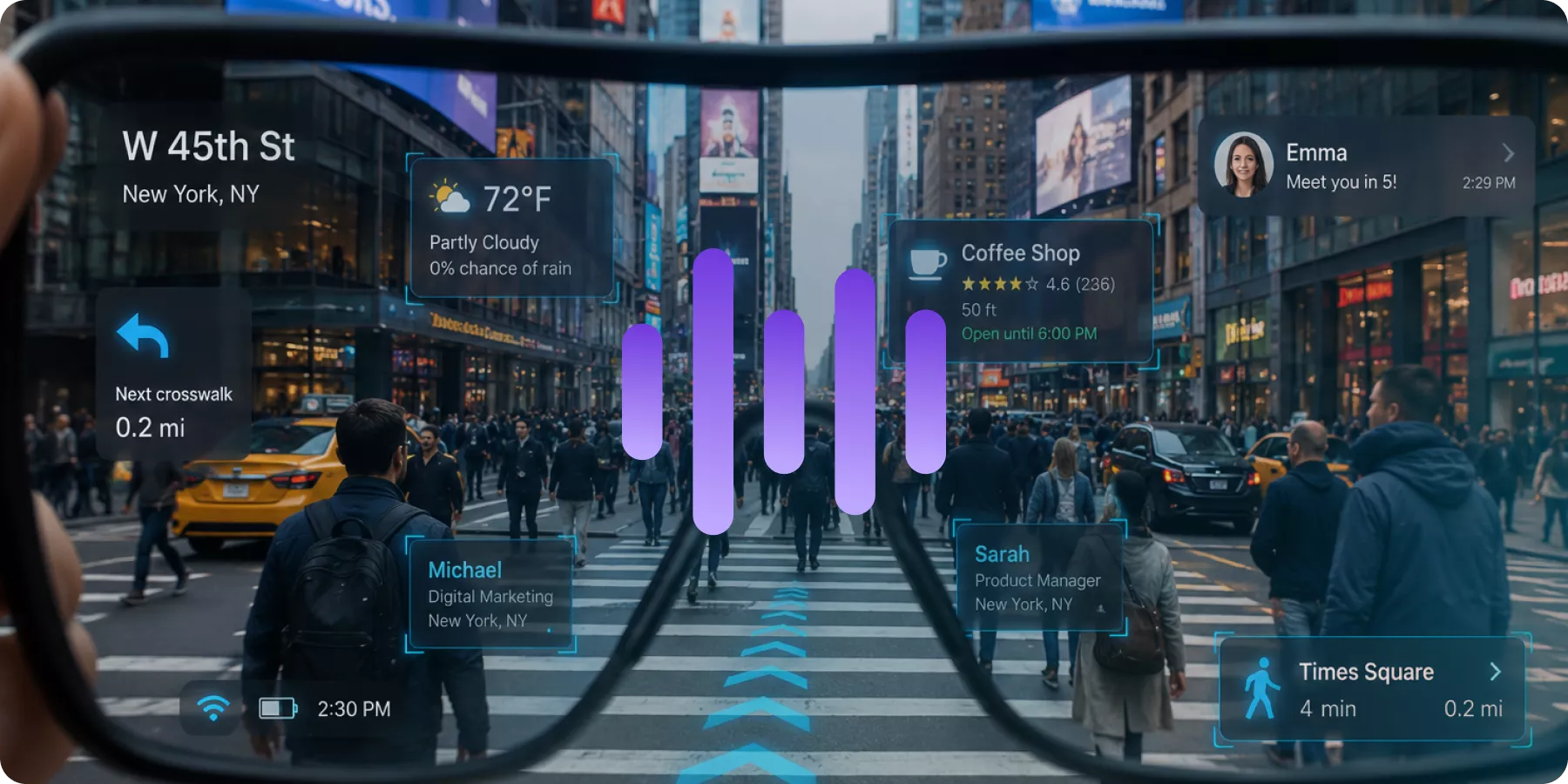
Within the next decade, our hardware will catch up seamlessly to our data environments. With the rapid evolution of smart glasses, augmented reality, and spatial intelligence, digital overlays will integrate smoothly into daily routines.
Luca expects that our digital interactions will seamlessly merge with our vision of the world:
“In 15 years, probably smart classes and other VR equipment is going to be much more widespread. So it’s gonna feel normal to have this kind of overlay over the real world. So, what we see today in our phones as photos, videos, audios, and documents in the future is going to be much more normal to see them attached as an overlay to the real world.”
If you are a founder, technology executive, or forward-thinking marketer, the advice from the Cubish team is simple: don’t wait for a flawless framework to start building. Innovation requires tenacity, rapid deployment of minimum viable products, and quick adaptation to real-world feedback.
Want to dive deeper into the code and philosophy powering the spatial internet? Watch the full video interview on YouTube or Listen to the episode on Spotify.
Discover how you can claim your own digital space at Cubish.com.